Showing posts with label children's optometrist. Show all posts

Friday, May 24, 2013

Girl goes blind when she failed to get to an optometrist for an eye infection

Here is a story from the Victoria Times Columnist that reminds us to go to the optometrist whenever we have eye or vision problems.  It might save your sight.  Here is an excerpt:

Bernadine Nielsen encourages her four children to get their eyes checked every year. The 41-year old Regina-based mother and student knows all too well the perils of neglecting eye health.
 Nielsen went blind after developing eye inflammation at the age of eight. Growing up on a Cree reserve in northern Saskatchewan with her parents and six siblings, there was no easy access to medical care. Driving to see a doctor of optometry took six hours, but Nielsen to this day wishes the local nurses had encouraged her to make the trek.
 When Nielsen started experiencing symptoms of iritis, a painful condition that causes an inflammation in the iris of the eye, she wasn’t taken to see a doctor of optometry until her vision got worse, despite the fact that the condition ran in her family.
 Without medical care, Nielsen’s eyes burned, her vision became cloudy and she became extremely sensitive to sunlight. When the little girl finally made it to see a doctor of optometry, it was too late to preserve her vision.
“By then [the inflammation] had spread all over my eyes and destroyed my eye area,” Nielsen says, adding, “I suppose if I was diagnosed earlier I probably would be able to see now.”
She’s right, according to Doctors of Optometry Canada (DOC) whose experts say iritis can be treated with eye drops if caught early through an eye exam by a doctor of optometry.
Read the entire article here. 

Wednesday, January 16, 2013

Children's eye exams

Did you know that a child should have their first eye exam at the age of six months and then annually thereafter?  Like most medical conditions, eye health and vision problems are much more treatable when caught early.

Good vision in infants is also critical for visual, brain and overall development.  A child with poor vision is prevented from effectively exploring and understanding the world and deprived of valuable brain stimulation.  Studies have also proven what eye doctors already know, that vision problems that persist lead to adult problems such as joblessness, incarceration, lower income and behaviour problems.  Life threatening diseases can also lurk in the eyes of young child.  Read more...
 
Here is a video of Dr. M. K. Randhawa talking about a patient story from our Vancouver eye clinic involving a five-year-old girl who had been legally blind her whole life - until she came in for an eye exam:


Image courtesy of arztsamui / FreeDigitalPhotos.net

Monday, November 19, 2012

Vision and learning

At Vision Source Vancouver, optometrists help children learn by treating vision problems that interfere wit learning.

At our Vancouver optometry clinic one of the most professionally and personally rewarding things we do is to help children reach their full academic and intellectual potential by treating vision problems that interfere with learning.  There are a number of vision problems that interfere with learning beyond the obvious one that can be fixed with glasses or contact lenses and need to be treated by a developmental optometrist using vision therapy.  These include visual information processing and binocular vision disorders, convergence insufficiency and accomodative insufficiency. These disorders are sometimes the result of traumatic brain injury.

That's because these are not problems with visual accuity,which means that even if a child has 20-20 vision as measured with the eye chart, the child's vision could be substantially deficient if she has one of these visual problems.


For who want to learn more about vision and learning, here are some informative articles:

More visual symptoms means lower academic performance
Feb 29, 2012

Vision therapy for convergence insufficiency improves academic performance ...
Jan 16, 2012

82% of teachers report an improvement in students after vision therapy
Jun 16, 2012

Binocular vision dysfunctions ate my homework
Mar 31, 2012


Study proves that vision problems interfere with learning and cause dyslexia
Apr 25, 2012


60% of students labled "learning disabled" students failed two or more binocular vision tests
Oct 20, 2012

Symptoms of some vision problems are a lot like ADHD - make sure your child is not misdiagnosed and unnecessarily medicated.

To find a doctor visit www.covd.org

Tuesday, October 23, 2012

Visual function development: behaviors to watch out for in your children

Developmental optometry and ophthalmology


Dr. Lea Hyvarinen is one of the worlds few developmental ophthalmologists.  Usually, if you or your child has a developmental vision problem you will see a developmental optometrist like Dr. Randhawa  who is a member of the College of Optometrists in Vision Development (COVD).  Dr. Lea has just commenced a blog on children's vision development, which you can visit here and was a well-received speaker at the COVD annual meeting last weekend.

Dr. Lea Hyvarinen


In a recent post about infants with normal visual development, she provided the following table, which summarizes the development of visual functions that are easy to for parents and teachers to observe.  The table and the related post give an excellent indication of the quality of her new book called "What and how does this child see?" 

Visual information processing


The book covers many of the topics discussed on this blog, including as visual information processing, a topic that North American ophthalmologists tend not to be familiar with.  For example, see this 1996 study from the field of rehabilitation medicine published in the journal NeuroRehabilitation by Raymond et al., where the authors say that patients with potential visual information processing deficits "should be referred to a behavioral or neuro-optometrist" and noted that  "referrals made to an ophthalmologist may be insufficient, as they are primarily concerned with the health of the eye only."  Of course, Dr. Lea is an exception to this and would likely provide excellent assessments of her patient's visual information processing skills.

Visual development behaviors to watch for

Parents can refer to this table when trying to assess their child's visual development.  But understand that trained professionals should be consulted for reliable assessments and diagnoses.  As noted by Dr. Lea, the table "summarizes the main steps of the visual development. These milestones are used in many countries in the follow-up of normal development of visual functions and in detecting symptoms and signs of deviations from the norm."

Age (months)     Behavior
0–1•       turns eyes and head to look at light   sources 
•       horizontal eye tracking, tonic focusing
2–3•       intense eye contact at 6-8 weeks 
•       vertical and circular tracking
•       interested in mobiles
•       interested in lip movements
3–6•       watches own hands 
•       reaches toward, later grasps hanging objects
•       observes toys falling and rolling away
•       shifts fixation across mid-line
•       visual sphere of attention widens gradually
•       very active in visual interaction
7–10•       notices small bread crumbs, touches them 
•       adjusts the grasp to the size of the objects
•       interested in pictures, also stereo images
•       recognizes partially hidden objects
•       recognizes family members by facial features
11–12•       knows places at home 
•       looks through window and recognizes people
•       recognizes pictures, plays hide-and-seek
•       can predict adult’s goals of motor actions
For more information of children's vision, eye care, and children's optometry, please visit www.kidsvision.ca.

Related articles:


Study proves that vision problems - visual information processing deficits -  interfere with learning to read and cause dyslexia

The former First Lady of the United States on her daughter's developmental vision problem and how vision therapy worked for her


Mom of struggling reader speaks out


Vision problems can have drastic effects on brain development and learning


How to choose a children's (pediatric) optometrist


Binocular vision dysfunctions ate my homework 


TED: ideas worth spreading - Dr. Susan Barry on vision therapy and depth perception


Patient story - Five year old girl sees her mom's face for the first time in our Vancouver eye clinic


Monday, October 22, 2012

Convergence insufficiency symptoms - doctors need to pay attention to performance related symptoms such as reading performance, attention and ADHD-like symptoms


In a study published in October 2012 in the journal Optometry & Vision Science, researchers set out to to investigate the symptoms that children with convergence insufficiency experienced and to determine whether certain categories of patients (grouped by age, sex, ethnicity, children who's parents reported that they had ADHD  etc.) experienced symptoms in a common way.  In short, the study sought to figure out whether there was a pattern to convergence insufficiency symptoms.

The study is a validation of the approach we take in our Vancouver optometry clinic, where we always assess performance related symptoms. it is performance related symptoms that make convergence insufficiency a problem in the first place and the reason why patients with convergence in sufficiency need treatment.

Here is how the study was conducted.  The researchers conducted a a randomized clinical trial in which they administered the convergence insufficiency symptom survey before and after treatment.  There were 221 children aged 9 to 18 years with symptomatic convergence insufficiency who participated in the study. Performance-related vs. eye-related symptoms for was compared.  Performance-related symptoms are symptoms such as having difficulty reading or concentrating on school work.

At baseline, the score for performance-related symptoms was greater than that for eye-related symptoms  regardless of age, sex, race/ethnicity, or presence of parent-reported Attention Deficit Hyperactivity Disorder (ADHD). Symptom severity increased with age. Children with parent-reported ADHD were more symptomatic than those without parent-reported ADHD. This study adds to the literature linking ADHD to convergence insufficiency.

There was a significant improvement for the performance- and eye-related symptoms in the children who responded to treatment for convergence insufficiency. It was found that girls had significantly lower performance-related symptoms than boys, and black children reported less eye-related symptoms than white children. Children without parent-reported ADHD had significantly less symptoms overall and less eye-related symptoms than children with parent-reported ADHD.

The study authors concluded that because of a high frequency of both performance- and eye-related symptoms, eye doctors should perform a targeted history that addresses both types of symptoms to help identify children with symptomatic convergence insufficiency. In other words, doctors who ignore performance related symptoms and just focus narrowly on the eye are liable to miss patients who have convergence insufficiency.  The study focuses attention on the important relationship of convergence insufficiency and symptoms and their potential influence on ADHD, reading performance, and attention.

Related articles:


Saturday, October 20, 2012

Patient story: 5 year old girl sees mom for the first time in the eye doctor's office


Here is a video of me telling the story of a five-year old girl who saw her mother's face for the first time in my office.  While the story is very touching, it is also quite disturbing.  This is not supposed to happen.  Untreated vision problems  in children can be very damaging. Unfortunately, I'm probably not the only children's optometrist to have had this kind of an experience.
One in five children has a vision disorder. Not knowing any differently, many of these children accept poor vision and other eye problems as normal. If left unchecked, serious long-term effects can result. 
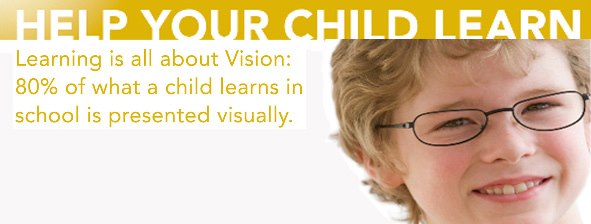
That is why experts recommend that a child should have their first doctor's eye exam (by an optometrist or an ophthalmologist) at six moths of age.  Poor vision in the first five years of life deprives a child of critical early stimulation, development and learning.  Remember that 80% of our learning happens through our visual system.
The last two videos are two important public service messages created by the BC Association of Optometrists on the'importance of children's eye exams.


To learn all about children's vision and eye health visit www.kidsvision.ca or www.visiontherapy.ca.

Wednesday, September 26, 2012

Why do parents take better care of their own eyes than the eyes of their children?

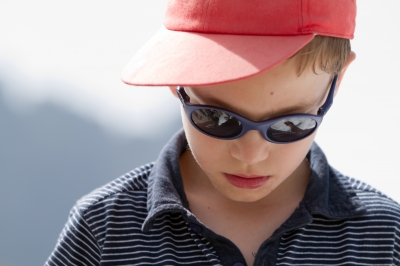
I went to the Puyallup, Washington state fair last week.  It was a hot, sunny day and the fair was jam packed with kids and their parents.  Out of the hundreds, perhaps thousands of kids I saw that day, my kids where the only ones in sunglasses.  But at least half the parents I saw were in sunglasses.

Why do parents take better care of their own eyes than the eyes of their children?


Kids are not being protected from  UV radiation

My own observations at the state fair are confirmed by a report that was issued by The Vision Council in May 2012, that shows that while 73% of adults do wear sunglasses, only 58% of them make their children wear sunglasses.


UV exposure over time can cause eye disease and permanent vision loss

The report suggests that too many people still do not understand the serious damage that UV exposure can have on your eyes. Even fewer realize that it is cumulative exposure over time – which happens on both sunny and cloudy days – that leads to vision threatening diseases. One such disease, macular degeneration, leads to permanent vision loss and their is no cure..

The solution is to wear sunglasses and regular eye glasses with proper UV protection. Kids need this more than adults because the lens of a child’s eye is not as good as blocking UV rays as the lens of an adult eye.  Other diseases that you can protect against by wearing sunglasses are cataracts and skin cancer around the eye

Wearing sunglasses should be seen as a serious preventative health measure. Here is what macular degeneration can do to your vision:


UV damage also causes cataracts. Here is what cataracts can do to your vision:


Skin cancer around the eyes


Optometrists are always mindful of the possible development of skin cancer in the skin surrounding the eyes.

In fact, the eyelid region is one of the most common sites for nonmelanoma skin cancers. Skin cancers of the eyelid, including basal cell carcinoma, squamous cell carcinoma, and melanoma, account for five to 10 percent of all skin cancers.  The best way to prevent this type is skin cancer is to reduce your exposure to UV radiation which comes with sunlight. The best way to do that is to wear sunglasses and eye glasses with advanced and more effective UV technology built into the lenses.

To learn more about skin cancer around the eyes, read the following studies:

  • Abraham J, Jabaley M, Hoopes JE. Basal cell carcinoma of the medial canthal region. Am J Surg1973; Oct; 126(4):492-5.


The right UV lens technology makes the difference


It is also important to realize that not all lenses are the same at blocking UV rays. Even lenses that claim 100% UV protection actually don't deliver on that promise. However, newer lens technologies are tackling that problem and provide much better UV protection.  These lenses, such as Crizal Forte UV lenses come with an ESPF 25 rating which denotes far superior UV protection than ordinary lenses. To learn more read our previous post on new UV lens technologies.  Another important thing to realize is that you can get advanced UV protection in non-sun eyewear.

Sunglasses now or botox later

Sunglasses and eyewear with advanced UV protection also have cosmetic benefits. They prevent wrinkles from developing around the eyes.  That will save you thousands of dollars in botox later in life!

Image od boy in sunglasses courtesy of chrisroll / FreeDigitalPhotos.net

Friday, August 31, 2012

The gold standard treatment for convergence insufficiency


Convergence insufficiency (CI) patients are unable to properly make their eyes move inward when doing near work like reading. Often, the intensity of symptoms in CI depends on the amount and type of near work a patient does.  Students obviously do lots of near work their symptoms may be severe and diminish their academic performance.

The problem of CI is serious enough that the National Eye Institute (one of the National Institutes of Health in the United States) funded a number of studies to determine the best treatment for CI.  These studies are known as the Convergence Insufficiency Treatment Trials (CITT).  Most of the CITT studies can be found here.  The treatments investigated by the CITT included office-based accommodative–vergence therapy with supplemental home therapy, placebo office-based vision therapy, home-based computerized vision therapy with pencil push-ups, and pencil push-ups. 

A major review of the CI research to date was published in the journal Optometry earlier in 2012.  You can read the entire review here.

Patients who participated in the CITT were assessed at the end of 12 weeks of  therapy. In-office vision therapy supplemented with home therapy was found to be the most effective treatment. Long-term effects were determined at 6 months and 12 months of follow-up and the beneficial effects of vision therapy were found to be lasting.

Vision therapy is the gold standard for treating CI.

Thursday, May 24, 2012

Parents take better care of themselves than their kids

Any parent would want to took after their child's health at least as well as they look after their own. But a parent can only do this if they have the right information.

Kids are not being protected from UV radiation


According to a new report issued by The Vision Council in May 2012, this is not happening when it comes to keeping eyes healthy by protecting them from harmful UV radiation. The report shows that while 73% of adults do wear sunglasses, only 58% of them make their children wear sunglasses.

UV exposure over time causes eye disease and vision loss


The report suggests that too many people still do not understand the serious damage that UV exposure can have on your eyes. Even fewer realize that it is cumulative exposure over time – which happens on both sunny and cloudy days – that leads to vision threatening diseases. One such disease, macular degeneration, leads to permanent vision loss and their is no cure.

The solution is to wear sunglasses and regular eye glasses with proper UV protection. Kids need this more than adults because the lens of a child’s eye is not as good as blocking UV rays as the lens of an adult eye.

What cataracts and macular degeneration look like

Wearing sunglasses is a serious preventative health measure. Here is what macular degeneration can do to your vision:


UV damage also causes cataracts. Here is what cataracts can do to your vision:


The right lens technology makes the difference


It is also important to realize that not all lenses are the same at blocking UV rays.  Even lenses that claim 100% UV protection actually don't deliver on that promise.  However, newer lens technologies are tackling that problem and provide much better UV protection.  To learn more read our previous post on new UV lens technologies.


Thursday, April 19, 2012

How to choose a children's optometrist - tips from a pediatric optometrist in Vancouver, BC

Children need to see the optometrist every year starting at six months of age.  That's because children are at risk of a number of vision and eye health problems that can cause lasting damage if not caught and treated early.  Vision problems can also negatively impact child development and grow into adult problems (like poor educational and vocational achievement, social problems and increased rates of incarceration).

I have a thriving pediatric optometry practice in Vancouver, BC.  Parents bring their kids in from all over Metro Vancouver and Surrey mostly because of word-of-mouth referrals.  But what about my children's optometry practice gets parents talking and recommending me to other parents?  Here are some of the things that I think an optometry clinic must have to provide excellent eye health care for children.

Optometrists that have a personality that kids love


Nothing beats an eye doctor that loves kids and has children of his or her own.  Not only do I have two very young children, but I love kids and have always devoted a significant part of my life to children.  A kid- friendly personality comes through when you meet an optometrist.  You can do a personality test on a prospective optometrist by having an eye exam before you bring in your  kids to get a sense of what the doctor is like. Are they warm, friendly and energetic?  Kids love that.  Or are they cold, distant, excessively analytical.  Kids are likely to be unimpressed with that.  If a doctor can engage a kid's attention, the visit is bound to be fun, informative and, most importantly, medically useful.

Demonstrated interest in children


As an example of this factor, in optometry school, one of my projects was to develop a children's book tittled Iris Goes to the Optometrist that parents could use to teach and prepare their kids for going to the optometrist.  You can find it on Google Books, just click here.  Optometrists that are the best with children have things like this in their professional or educational experience that show their love, concern for and interest in children.

A member of the College of Optometrists in Vision Development


Ask if the optometrist is a member of the College of Optometrists in Vision Development or visit http://www.covd.org/ to search for their name.  So many children's vision problems are developmental in nature and some optometrists who are focused on an adult population may not test for disorders like binocular dysfunction, convergence insufficiency, amblyopia, visual information processing.  These disorders can make if very difficult for kids to success in school and may affect their self esteem and other aspects of their lives.  An optometrist that is alive to these disorders and has a vision therapy practice (like I do) to treat them can make a huge difference in a child's life. 

Sometimes when these visual disorders go undetected, children may be misdiagnosed with attention deficit hyperactivity disorder, or ADHD, because the symptoms of the vision disorders are similar to ADHD symptoms.  Children should not be medicated for a condition that they don't have and you can avoid that risk by finding an appropriate children's optometrist.

Does the clinic have a children's play area?


One of the things parents love about our new Vancouver clinic space is that we've devoted a good chunk of space for a children's play area, packed with toys and books.  I know that cranky kids, bored in a waiting room, are a challenge to deal with because I deal with it when I take my kids to the doctor.  I put in my clinic what I wish my dentist and GP would put in their clinic.  Choose an optometrist that has done the same.

Does the clinic have a good selection of frames and eye-wear for children?


If a child needs glasses, its nice to be at a clinic that caters to that need.  At our Vision Source Vancouver optometry clinic, we have a very good selection of kids frames and eye-wear and I'm always surprised by the reaction of parents.  They are not used to having so much to choose from.  Kids are often neglected by optical dispensaries.  Choose an optometrist that has a good selection of kids frames.  Parents are busy enough.  It's very nice if you can reduce your running around and get what you need at one place.

By Dr. M.K. Randhawa

Wednesday, April 4, 2012

Reading glasses are not just for people over 40 anymore

Reading glasses aren’t just for people over 40 anymore, reports a CBS affiliate in Chicago.

All our texting, ebook-reading, ipad use and other small screen viewing is messing with our vision.
Dr. Valerie Kattouf, chief of pediatric optometry at the Illinois Eye Institute, says more of her young patients need reading glasses.
“I see it in school-age kids. I see it in older school-age kids – the teenagers – and I see it a lot in young adults of working age, you know, 20s and 30s,” Kattouf said.Kattouf says it is not just the fault of small cell phone screens and tablet computers. That on top of homework and reading – whether print or online – can lead to focus problems.
“The intensity of the near work without any kind of breaks or attention to what that does to you,” she said.
She says young people have always had vision problems, but she thinks the increase in the amount of time they spend doing what she calls “close work” is leading to more problems with far-sightedness.Kattouf suggests limiting screen time and taking frequent breaks to look off in the distance in order to rest your eyes.

That's good advice.  An easy way  to remember is to think of the 20/20 rule: if you want to maintain your 20/20 vision, make sure that every twenty minutes, you take a break and look into the distance for at least 20 seconds. 


The impact of the digital revolution on our vision is becomming more prevalent as more people join the digital device generation and, not surprisingly, it is getting more attention in the media.  The New York Times had an article on Computer Vision Syndrome recently.  To learn more about Computer Vision Syndrom and visual fatigue and what you can do about it, click here.

Technology-related vision problems are fast becomming a major segment of the vision disorders that the Vision Source Vancouver optometrists deal with every day.  We have solutions to prevent the problem, to fight visual fatigue and discomfort and to make vision the best that it can be when interacting with digital screens.

And a note on reading glasses.  If you read my previous post, you will note that if you need reading glasses, it's better to stay away from the ready-made readers that you get from a drug store or book store because, more likely than not, they don't measure up to optical standards.