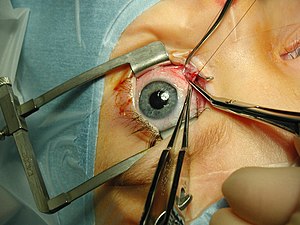
A new study pubished in the journal Optometry & Vision Science found that heavy alcohol consumption significantly increased the risk of age-related cataract. There was some evidence, but not as strong, that moderate consumption may help prevent cataracts.
Cataracts require surgery to treat. The surgery is fairly common and usually results in a good outcome. However it is not without risks and bad outcomes like double vision and other problems can occur. It is best to avoid contracts altogether. Avoiding heavy drinking appears to be one way to do that. Source:
Optometry and Vision Science: Official Publication of the American Academy of Optometry Different Amounts of Alcohol Consumption and Cataract: A Meta-Analysis Optom Vis Sci 2015 Apr 01;92(4)471-479, Y Gong, K Feng, N Yan, Y Xu, CW Pan
How effective is surgery for intermittent exotropia? The authors of one study noted that 62% of intermittent exotropia surgery patients achieved only a fair or poor outcome and that 60% of the patients required at least one re-operation."
At our Vancouver eye clinic, we manage a large number of patients with cataracts. That includes referring them for surgery where appropriate, preparing them for surgery with medication that will make it easier for them to deal with common side effects of the surgery such as dry eye and also managing their post-operative care.
One of the most important things that eye doctors do for cataract surgery patients is explain the procedure as well as it's risks and complications. A new study published in the Canadian Journal of Ophthalmology found that some type of complication during the surgery were found in 10.35% of patients and complications arising after the procedure affected 26.63% of patients. That's a lot of patients and it highlights the need to have effective care for the patient after the surgery.
The most common complication during surgery was posterior
capsule rupture (2.83%), whereas the most common postoperative
complications were corneal edema (15.42%) and ocular hypertension
(7.34%). These are described below.
Posterior capsule rupture
The lens of the eye is held in place by a thin membrane called the capsule. The purpose of cataract surgery is to remove the lens of the eye because it has become cloudy, causing bad vision, and then to replace it with a clear artificial lens. Surgeons want to keep the capsule in place to hold the new artificial lens implant. If the capsule is perforated during the surgery, it is called a capsule rupture, which can lead to various complications.
Corneal edema
The cornea is the clear dome covering the colored part of the eye. The cornea lets light into the eye and focuses it, producing clear vision. Sometimes the cornea swells after surgery. This is called corneal edema and it causes cloudy vision. Other names for corneal edema after cataract surgery include “pseudophakic corneal edema,” “pseudophakic bullous keratopathy,” and “aphakic bullous keratopathy.”
Patients with corneal edema usually notice blurred vision or halos around lights. At the beginning, blurriness is often worse in the morning, but improves over the course of the day. Ocular Hypertension
Ocular hypertension is increased pressure inside the eye. High intra-ocular pressure can damage the optic nerve and cause permanent vision loss if not treated.
Source
Canadian Journal of Ophthalmology. Journal Canadien d'Ophtalmologie Factors Affecting Cataract Surgery Complications and Their Effect on the Postoperative Outcome Can J Ophthalmol 2014 Feb 01;49(1)72-79, N González, JM Quintana, A Bilbao, S Vidal, N Fernández de Larrea, V Díaz, J Gracia
We came across this article that reports on a study that was published in a recent issue of the British Journal of Ophthalmology that looked at strabismus surgery rates in children up to the age of 15 from 1963 to 2010 (519,089 children in total). The study found the rate of strabismus surgery in the United Kingdom had dropped from 189 per 100,000 in 1968 to 64 per 100,000 in 2010, a threefold decrease.
According to the article, the major reason was non-surgical treatment approaches:
A switch from surgical to non-surgical treatment approaches, rather than a genuine fall in the prevalence of strabismus was likely to explain a large part of the decline in procedure rates, said the author, who suggested regional variations may reflect differences in strabismus prevalence.
We have not had a chance to read the study, but we have written extensively on this blog about non-surgical alternatives to strabismus surgery:
Vision therapy or surgery for strabismus (esotropia, exotropia)
Jan 17, 2013
We here at Vision Source Vancouver think that it makes good sense to use effective non-surgical vision therapy to treat strabismus (sometimes called cross eyes, eye turn, esotropia, exotropia). The reason is that strabismus or ...
Another risk of strabismus surgery?
Mar 07, 2012
Strabismus - a condition where the eye abnormally turns in or out due to one or more of the eye muscles malfunctioning - is often treated with surgery in which the properly functioning muscle is cut and re-attached so that it ...
After three unsuccessful strabismus surgeries, patient says enough
Nov 19, 2012
Repeat strabismus surgeries are common and are a reason parents seek non-surgical alternatives like vision therapy. ... Vision Therapy is an effective alternative to strabismus surgery. Here is a recent comment by a reader ...
The risks of surgery pose a problem because vision therapy is a safe and effective non-surgical treatment for most types of strabismus, which makes most people think twice about surgery as a first choice treatment.
A famous case of vision therapy treatment for strabismus was the subject of the book Fixing My Gaze,an inspirational book by neuroscientist, Susan Barry, who was born with strabismus and had lived all her life without stereo vision, meaning that she could not see in three dimensions.
Even a single exposure to anesthesia during surgery is associated with developmental problems in children: new study
There is now new evidence that even a single exposure to anesthesia can be dangerous for a child. A study published in December 2012 in the journal Evidence Based Medicine found that children exposed to anaesthesia for surgery under 3 years of age were found to be at significantly increased risk for developing disabilities in receptive language, expressive language, total language and abstract reasoning at age 10.
The study authors commented that:
This study was the first to report the effects of anaesthetic exposure early in life on neuropsychological outcome using individually administered neurocognitive tests. Perhaps due to the greater sensitivity of these tests, Ing and colleagues observed disability even following a single exposure in early childhood, while several previous reports, utilising group-administered tests, had only detected learning abnormalities following multiple exposures.
This is the latest of 250 studies that have linked anesthesia exposure at a young age to brain development disorders. The previous studies found a link between anesthesia and learning disabilities in children who had two more more exposures to anesthesia, while the new study found a link in children with just one exposure. In the study's own words:
Thus far, more than 250 studies in immature animals have demonstrated that exposure to commonly used anaesthetics produces neuronal cell death, alters brain development and may lead to neurocognitive impairment. Similarly, in humans, an association between learning disabilities and two or more anaesthetic exposures has been observed in some studies, as most recently reported in children under 2 years of age.
Children who have strabismus surgery are risk of repeat surgeries, all of which carry the same risk. Eye surgeons often lament the need for repeat eye surgeries for strabismus patients. Surgeon, John W. Simon, notes that "patients must regularly contend with the unfortunate reality that even the most accurately planned and carefully executed surgery may not totally eliminate the deviation [i.e. the misalignment of the eyes] or completely normalize rotations. In addition, strabismus tends to recur over time." This limitation of surgery often results in the the patient being subjected to repeated surgeries - all of which may be unsuccessful. It is not uncommon for a patient to have had two or three or more surgeries and still have a noticeable misalignment or poor binocular vision together with depth perception problems or all three. For this reason, the surgeon's view is that "strabismus is less a problem to be cured than a problem to be controlled, with the minimum number of surgeries": Simon, John W. Complications of Strabismus Surgery. Current Opinion in Ophthalmology. 2010. 21: 361-366.
One study found that only 45% of children had successful alignment of the eyes at an eight-year follow up to their strabismus surgery. And while the low percentage was disappointing enough, 20% of the children had to undergo repeat strabismus surgeries which were ultimately unsuccessful: Awadein A, Sharma M, Bazemore MG, et al. Adjustable suture strabismus surgery in infants and children. J AAPOS 2008; 12:585–590.
Parents need to get the right information and ask the right questions
Parents of children with strabismus need to carefully evaluate the available treatment options. They should see a developmental optometrist like Dr. M.K. Randhawa to talk about whether vision therapy is effective for the type of strabismus that the child has. Parents contemplating surgery need to ask their surgeons about the risk of anesthesia exposure during surgery as well as all the other risks of strabismus surgery (ranging from death - a mortality rate of 1.1 per 10,000 cases is reported - scars, repeat surgeries, infections, lost muscles, vision loss, lack of depth perception).
Parents should consider vision therapy if their developmental optometrist thinks that vision therapy is appropriate for the type of strabismus that the child has. At our clinic, we have successfully treated dozens of strabismus patients, achieving straight eyes as well as functional binocular vision and depth perception and other developmental optometrists likely have similar results.
Here is a TED talk on vision therapy by neuroscientist, Dr. Susan Barry, author of Fixing my Gaze:
Professor Dominick Maino, a fellow of the College of Optometrists in Vision Development, recently had a discussion with an eye surgeon on his own blog, MainosMemos, on why surgery, because of the risks and results that are not satisfactory for many patients, should only be used as a last resort. As only one example of undesirable outcomes, a study on surgery found that only 45% of children had successful alignment of the eyes at an eight-year follow up to their strabismus surgery. And while the low percentage was disappointing enough, 20% of the children had to undergo repeat strabismus surgeries which were ultimately unsuccessful: Awadein A, Sharma M, Bazemore MG, et al.Adjustable suture strabismus surgery in infants and children. J AAPOS 2008; 12:585–590.
Other risks of strabismus surgery include death, infections, blindness, scars, mistakes like surgery on the wrong eye, etc. You can read more about risks here.
One can't ignore the studies regarding anesthesia and the potential for future cognitive impairment. This is a work in progress and the pediatric specialties are following closely.
However, the surgeon goes on to say:
Like anything in medicine (and you should be well-versed since you received an "Excellence in Medicine" award) you have to consider the risk-vs.-benefit ratio. If I have a young patient with a 40 PD decompensated exotropia who is in danger of developing irreversible amblyopia and loss of stereoacuity, 30-40 minutes of anesthesia for strabismus surgery is not going to prevent him or her from getting into Harvard. [NB vision therapy and patching will not touch a 40 XT]. People need to be properly educated, look at all of the facts, and not over-react.
If there are no studies that prove that anaesthesia during strabismus surgery is totally safe, our point is that it is not sensible to take the risk when you don't need to. The basic ethical principle in medicine is "do no harm". If there is a treatment option that has no risk of harm, it should be the first choice. There are some types of strabismus that vision therapy cannot effectively treat, and for those surgery is probably a good idea given the cost-benefit analysis. But for the most common kinds of strabismus, vision therapy is a safe and effective treatment.
Dr. Maino referred to the following recent studies on strabismus surgery that highlight the reasons why it should not be first choice option for treating strabismus:
Haridas A, Sundaram V. Adjustable versus non-adjustable sutures for strabismus. Cochrane Database of Systematic Reviews 2005, Issue 1. Art. No.: CD004240. DOI: 10.1002/14651858.CD004240.pub2
"No reliable conclusions could be reached regarding which technique (adjustable or non-adjustable sutures) produces a more accurate long-term ocular alignment following strabismus surgery or in which specific situations one technique is of greater benefit than the other. High quality RCTs are needed to obtain clinically valid results and to clarify these issues. ......"
Rowe FJ, Noonan CP. Botulinum toxin for the treatment of strabismus. Cochrane Database of Systematic Reviews 2012, Issue 2. Art. No.: CD006499. DOI: 10.1002/14651858.CD006499.pub
The majority of published literature on the use of botulinum toxin in the treatment of strabismus consists of retrospective studies, cohort studies or case reviews. Although these provide useful descriptive information, clarification is required as to the effective use of botulinum toxin as an independent treatment modality. Four RCTs on the therapeutic use of botulinum toxin in strabismus have shown varying responses ranging from a lack of evidence for prophylactic effect of botulinum toxin in acute sixth nerve palsy, to poor response in patients with horizontal strabismus without binocular vision, to no difference in response in patients that required retreatment for acquired esotropia or infantile esotropia. It was not possible to establish dose effect information.Complication rates for use of Botox™ or Dysport™ ranged from 24% to 55.54%.
Elliott S, Shafiq A. Interventions for infantile esotropia. Cochrane Database of Systematic Reviews 2005, Issue 1. Art. No.: CD004917. DOI: 10.1002/14651858.CD004917.pub2
The main body of literature on interventions for IE are either retrospective studies or prospective cohort studies. It has not been possible through this review to resolve the controversies regarding type of surgery, non-surgical intervention and age of intervention. There is clearly a need for good quality trials to be conducted in these areas to improve the evidence base for the management of IE.
....8% ...of those treated surgically required second procedures for overcorrection within 6 months of the initial procedure and at 6-month follow-up 21% ... were overcorrected ....
At our Vancouver eye clinic, we see and treat lots of patients who have dry eyes following cataract surgery. Cataract surgery results in dry eye syndrome because the surgery cuts the nerves in the cornea of the eye, which impairs the ability of the eye to create a proper tear film. The result is dry eye. Dry eye can cause pain, irritation and decreased vision. Here's what everyone contemplating cataract surgery should know about what to do about dry eye. Read more...
Fixing My Gaze is and inspirational book by neuroscientist, Susan Barry, who was born with strabismus (an eye turn) and had lived all her life without stereo vision, meaning that she could not see in three dimensions.
She had three surgeries to "correct" the eye turn cosmetically but she still could not see properly and the eye was still turned, although less than before. She had lived this way for over 40 years until she met optometrist Dr.Theresa Ruggiero.
Dr. Ruggiero treated Susan with vision therapy which corrected the eye turn and allowed her see in three dimensions for the first time in her life. Can you imagine how her world was transformed?
"For the first time, I could see the volumes of space between different tree branches, and I liked immersing myself in those inviting pockets of space. As I walk about, leaves, pine needles, and flowers, - even light fixtures and ceiling pipes - seem to float on a medium more substantial than air. Snow no longer appears to fall in one plane slightly in front of me. Now, the snowflakes envelope me, floating by in layers and layers of depth. It's been seven years since I gained stereovision, but ordinary views like these still fill me with a deep sense of wonder and joy."
Our vision therapy practice includes many patients with strabismus but all of them are very young (obviously it is better to fix the problem when a patient is young to save her from living years with the condition).
Susan Barry's story is remarkable in that she was in midlife when she received vision therapy. The conventional wisdom, now being disproved by new studies, was that after a "critical period" around the age of 7 or 8 , the brain could not be trained (or "rewired") to see in new ways. The old scientific thinking was that after early childhood, the brain became fixed. In fact, Susan Barry herself and other scientists thought that it was impossible for her to ever see in 3D.
Now, we know that the brain exhibits neuroplacticity and that given the proper behavioural therapy, even adults can rewire their brains. This has given hope to many people who did not receive treatment for visual processing disorders at a young age. Now it seems possible that even older patients with amblyopia or strabismus and other binocular vision disorders can benefit from treatments like vision therapy.
You can hear interviews with Susan Barry and read more about her story at her website: http://www.fixingmygaze.com/.
Under optimal clinical conditions the success rate for vision therapy treatment of strabismus is 87%
Vision therapy/orthoptics has been used to successfully treat the various forms of strabismus for over 100 years. Numerous studies have found it to have a 75% success rate in achieving normal cosmetic alignment of the eyes as well as functional binocular vision. Under optimal clinical conditions such as those in a private practice optometric clinic where each patients receives individualized, one-on-one care, the success rate can be as high as 87%.
The Ludlam Study on Vision therapy for strabismus
Dr. William Ludlam conducted a landmark study, but not the first such study, of 149 strabismus patients who came for treatment at the Optometric Centre of New York. Ludlam summarized the results as follows:
"combining the functional and almost cured groups and adding four patients whose eyes ware straight ... but are listed as 'moderately improved' because of the the technical requirements of the 'cured' categories (2 subnormal ranges of motor fusion, 1 with a 7" N.P.C. rather than the required 4", and 1 with frequent asthenopia, headaches and accomodative spasm), we may state that a total of 113 (76%) of the patients in the sample had binocular vision with straight eyes 95% of the time or more at dismissal from teh regular clinic training sessions. The other 36 patients had residual deviations occurring more often than 5% of the time, and were classified as orthoptic failures. Of these, 8 of the "moderate improvement" group dropped out when quite near the "almost cured" category, i.e. with their eyes straight well over half the time and possessing all of the technical factors necessary for a cure with several moths of additional stabilization work."
Even though the Ludlam study produced outstanding results, Ludlam pointed out that the patients treated at the Optometric Centre were treated in poor clinical conditions. For example, they received group therapy, control and management of each case was relatively poor, and they were treated by different clinicians who had diferent personalities and treatment approaches. He expected that under the optimal conditions of a private practice optometric office, the results would be even better. Indeed, subsequent studies shown this to be the case. Click here to read more about the Ludlam study.
The Hoffman & Allen Study on vision therapy for strabismus
Another significant study addressed Ludlam's expectation that optimal clinical conditions would produce better results. The study, by Hoffman, Cohen, et al., found that the vision therapy treatment fo strabismus had an 87% success rate in clinical circumstances that were "near optimal" such as those conditions that obtain at a private practice optometric clinic. The researchers also found that younger patients were easier to treat than older ones and that exotropes (patients whose eye turns outwards towards the wall) were easier to treat than esotropes (patients whose eye turns inwards towards to nose) . Even so, the vision therapy treatment of esotropes achieved a very impressive success rate of 74.5%. Moreover, the maximum success rate of 100% was obtained in treating intermittent and periodic eye turns whereas constant eye turns were treated at a still-impressive success rate of 76%.
Case Reports on vision therapy for strabismus
Numerous case reports have been published documenting the treatment of strabismus patients with vision therapy. The most recent was published in August 2011 in the journal Optometry by Peddle and Steiner who discussed two cases of adults with moderate sized intermittent exotropia (eyes turned outward to the wall). Both patients also had asthenopia (eye fatigue and discomfort), headaches, and/or diplopia (double vision). Twenty to 30 in-office VT sessions were recommended to reduce the magnitude and frequency of the deviation as well as improve their binocularity and decrease their symptoms. After completing VT, both patients became phoric for all distances, had normal vergence ability, and had normal near points of convergence.
The most famous case of vision therapy treatment for strabismus
In an inspirational book called Fixing My Gaze, neuroscientist, Susan Barry, who was born with strabismus and had lived all her life without depth perception as a consequence, meaning that she could not see in three dimensions. The book was Amazon.com's number 4 science book of 2009.
She had three surgeries to "correct" the eye turn cosmetically but she still could not see properly and the eye was still turned, although less than before. She had lived this way for over 40 years until she met optometrist Dr. Theresa Ruggiero.
Dr. Ruggiero treated Susan with vision therapy and corrected the eye turn and allowed her see in three dimensions for the first time in her life. Can you imaging how her world was transformed? I've heard rumors of a "Fixing My Gaze" movie but have not been able to confirm them. Doctor Barry has received much attention for her book and her experience with vision therapy. She has been interviewed for numerous publications and her story was the subject of a feature article in the New Yorker. You can visit Susan Barry's website here. Here are some videos of Susan Barry talking about vision therapy and strabismus:
When a patient has cataract surgery, the surgeon removes the eye's natural lens and implants an artificial lens is (called an intra-ocular lens). The most basic lens is covered by government insurance in Canada but patients must pay out of pocket for higher quality lenses that will result in better vision.
The problem is the prices that surgeons are charging their patients. Some prices are outrageously high and there is great variability between what different surgeons will charge for the same lens. It's difficult for patients to shop around because you can't just walk into a store and read the price tag. Moreover, surgery centers will often not tell you the price over the phone.
When a patient is faced with the authority of a surgeon in the exam room, it can be intimidating and difficult to question the surgeon's recommendation to buy premium lenses or to question the price being charged.
A recent study published in the journal PLoS ONE examined this issue. The researchers posed as patients and telephoned every cataract surgeon in Ontario, Canada, and asked their price for the most common type of specialty intra-ocular lens. They then measured the total prices quoted and price variation between surgeons.
The study concluded that although cataract surgery is covered by public health insurance, some eye surgeons charge much more than others for the same intra-ocular lens and associated testing. The researchers urged that greater access to price information and better regulatory control could help ensure that patients receive fair value for out-of-pocket health expenses.
In British Columbia pricing by surgeons was such a concern that the provincial government took over the market for intra-ocular lenses, using its buying power to get a good deal on the lenses and then to provide them to the public at cost. You can read the press release from the ministry of health here.
Often the best and most objective advice about specialty cataract surgery lenses comes from your optometrist. As eye doctors, they have the knowledge and experience to give you sound advice and because they are not the ones earning fees form doing the surgery or selling the lenses, they have no financial conflict of interest in helping you make the best choice.